

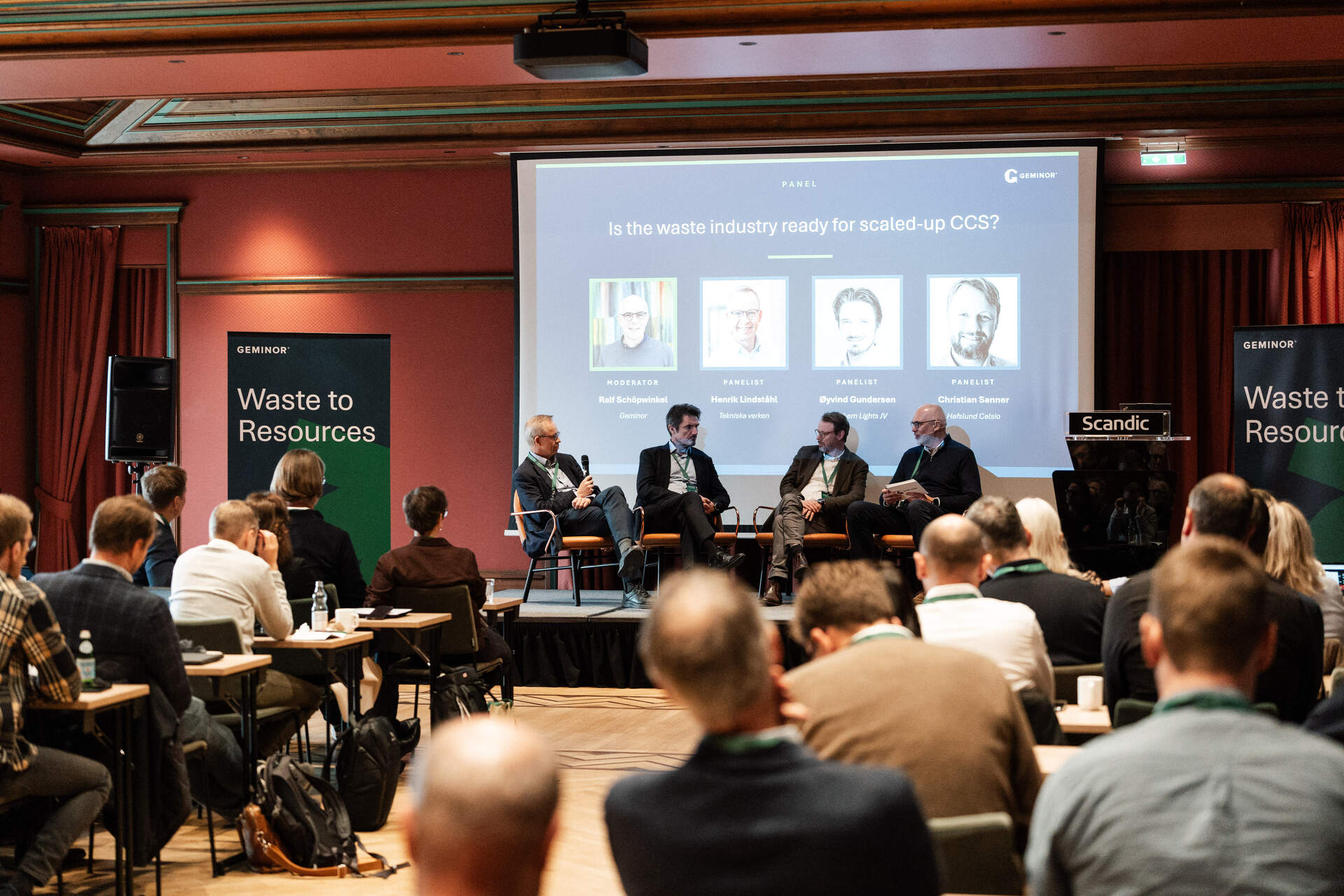
The event was fully booked. More importantly, it created the kind of conversations that rarely happen at trade fairs: focused, practical and directly tied to the decisions shaping the sector.
This was the first edition of Geminor Insight Day. The format was deliberate: a concentrated programme, a senior audience, and a room made up of people who operate plants, trade fuel fractions, develop infrastructure, or make regulatory and investment decisions. There was no exhibition floor and no filler. The agenda was built around the questions the sector is now being forced to answer.
A sector facing simultaneous pressure
The waste-to-energy sector is entering a more complex phase.
Carbon capture is moving from pilot projects to procurement. Fuel quality expectations are increasing. Plastics policy is creating new uncertainty. At the same time, the EU ETS, the Waste Shipment Regulation and RED III are adding new layers of compliance that operators cannot afford to treat as background noise.
These pressures do not arrive one by one. They arrive together.
Carbon capture, fuel quality and market direction
The morning opened with the CCS value chain. Hafslund Celsio, one of Northern Europe’s largest waste-to-energy operators and currently developing a full-scale carbon capture facility at Klemetsrud in Oslo, presented alongside Northern Lights, the infrastructure company responsible for CO₂ transport and permanent storage on the Norwegian continental shelf.
Together, they addressed the emerging market for carbon credits, the role of transport and storage infrastructure, and the gap between what capture projects can offer and what the waste industry is currently able to deliver.
Fuel quality, waste composition and R&D followed, before the programme turned to the plastics market. This session covered sorting technology, chemical recycling, and downstream solutions, with a practical focus on how upstream changes are already affecting the fractions reaching energy recovery facilities.
Franzefoss added an operational perspective, showing how new sorting technology is changing waste composition before material reaches the gate. This brought the recycling and fuel quality debate back to a central point: what happens upstream increasingly determines what is possible downstream.
The afternoon closed with a market overview of RDF, SRF and bio-RDF, set against the current policy landscape: ETS pricing, shipment regulation changes and RED III implementation timelines.
Seeing the infrastructure first-hand
Participants also joined a site visit to Hafslund Celsio’s Klemetsrud facility in Oslo, where the carbon capture project is under development.
Seeing the infrastructure first-hand changes the character of the conversation. Carbon capture becomes less abstract when the scale, logistics and investment requirements are visible on site.
What comes next
Geminor Insight Day will return.
The topics will evolve with the sector, but the format will remain the same: a focused event for senior professionals with direct exposure to the commercial, regulatory and operational decisions shaping the future of waste.