

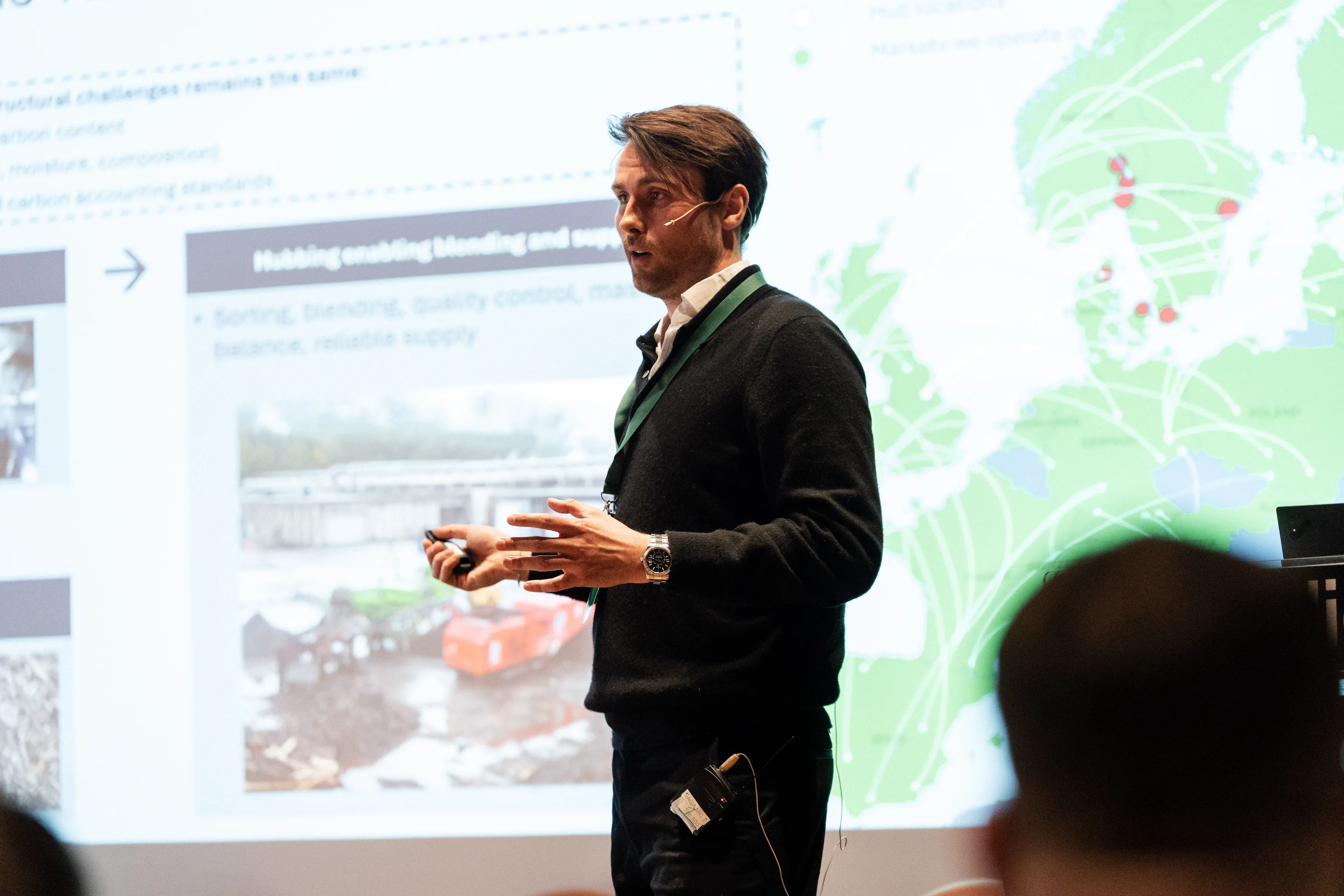
The move reflects a broader industry shift in which waste and biomass are increasingly converging as part of the transition to low-carbon energy systems. By combining these streams, Geminor aims to deliver more flexible and locally adapted fuel solutions to customers across the energy, cement and industrial sectors.
“Bio and waste are increasingly converging, and we are in a unique position to combine both streams,” says Victor Smith, recently appointed to lead Geminor’s biomaterials initiative. “We are combining local knowledge in low-value fractions with the scale of traditional biomass flows – creating flexible, locally adapted supply solutions across the value chain”
Instead of sourcing only fractions at the top of the value pyramid, Geminor is targeting underutilised, locally available materials that are often overlooked. By combining that local knowledge with large-scale biomass flows, we can create supply solutions that are both flexible and cost-competitive.
The expansion is closely linked to Geminor’s existing logistics network and hub operations, where complementary trade flows between waste and biomass enable more efficient transport and handling. This integrated approach allows the company to optimise supply chains while supporting customers’ growing demand for alternative fuels.
At the same time, tightening regulatory requirements are reshaping the biomass market. New EU frameworks are increasing expectations for documentation, traceability and sustainability across the value chain. For smallholders and local suppliers, there is a material risk of market exclusion; by helping them meet compliance requirements, we can ensure these volumes remain accessible to the market.
“The increasing complexity of the Fit For 55 EU regulatory requirements, such as REDIII, and the ongoing review of ETS inclusion, is raising the bar for the entire industry,” says Kirstie Jones-Williams, Director of Innovation and Sustainability at Geminor. “We are building the systems and expertise needed to support both suppliers and customers in navigating these changes and ensuring compliant solutions.”
Geminor is currently working towards recognised sustainability certifications, including SBP and SURE, while expanding its internal capabilities in compliance and documentation. This builds on the company’s established experience in managing regulatory frameworks within the waste sector.
The strategic expansion is also driven by customer demand. Many industrial players are already utilising biomass in their energy mix and are increasingly seeking higher biogenic content in fuels as part of their decarbonisation strategies.
“With our combined expertise in waste and biomass, we can offer tailored fuel solutions that support our customers’ transition to lower emissions,” says Ralf Schöpwinkel, Chief Commercial Officer. “This is a natural next step in strengthening our role as a partner in the circular economy.”
Geminor has already established initial biomass flows across the Nordic region and the Baltics and is exploring further opportunities to scale its activities through existing and new hub locations.