

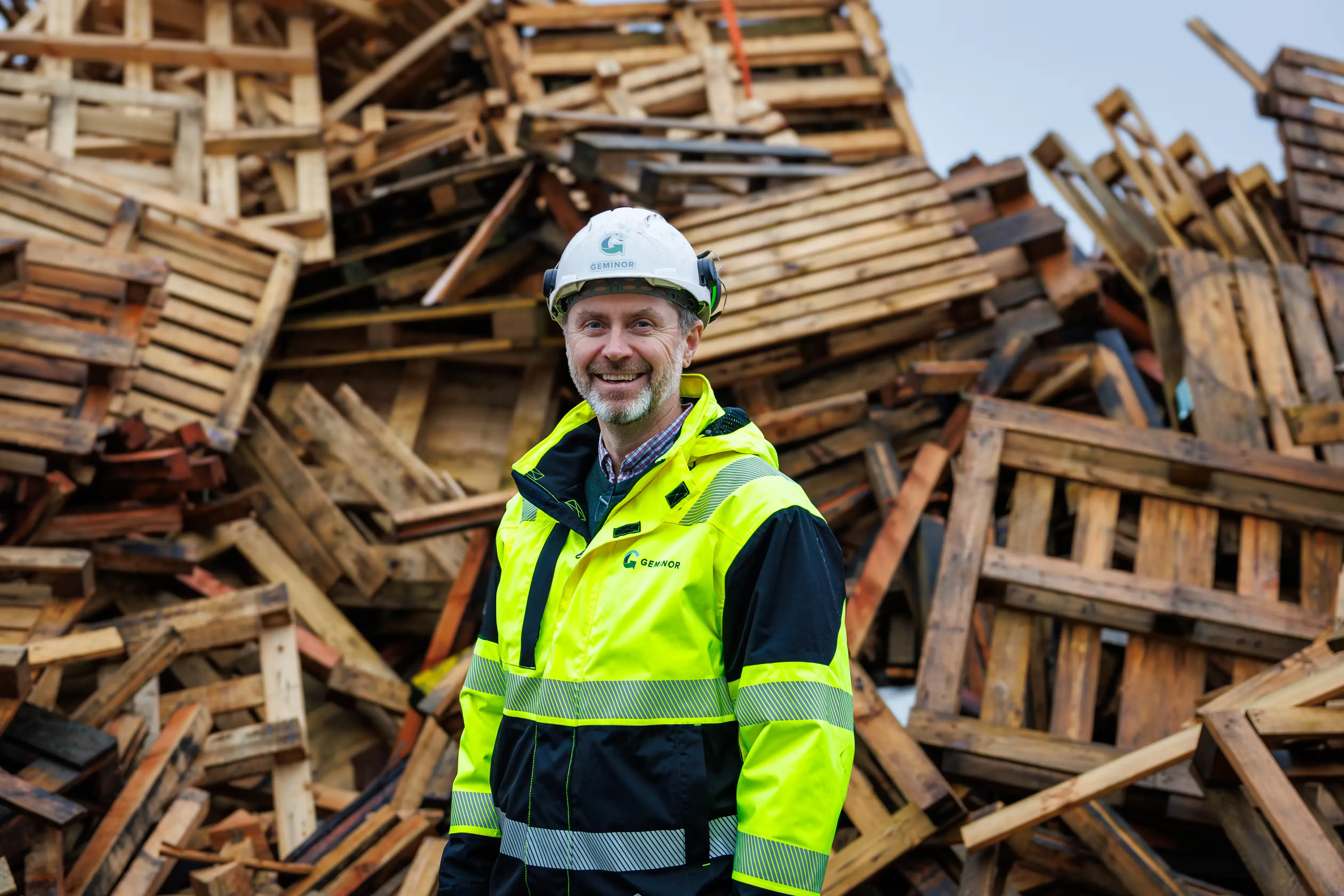
These are significant agreements for Geminor Norway. They confirm that the market has confidence in our ability to deliver competitive solutions and consistently high quality over time,” says Bjørn Håland, Managing Director of Geminor Norway.
The agreements primarily cover processed commercial waste (RDF) and have been signed with several regional and national counterparties. The contracts result from close collaboration among Geminor’s commercial, operational, and R&D functions. Handling these volumes requires a solid operational and logistics organisation, with a continuous flow of waste through the entire value chain.
“Handling around 150,000 tonnes of waste is a demanding logistics operation. It requires precise planning, strong partners, and high execution capability daily. The waste must be collected; it cannot wait,” Håland says.
The agreements are also closely aligned with Geminor’s long-term goals and investment in documentation, quality, and waste content control. As part of the deliveries, an extensive R&D programme is underway to map the fossil CO₂ content, plastic share, and other non-combustible fractions in the waste. The waste is both manually and mechanically sorted, with recyclable fractions separated, while the remaining material is sent for energy recovery, producing electricity and district heating.
“This is not only about volumes and logistics, but about understanding what the waste actually contains and how it behaves further along the value chain. Documentation and quality assurance are becoming an increasingly important part of the solutions we offer our customers,” Håland says.
The R&D programme is led by Kirstie Jones-Williams (PhD), Director of Innovation and Sustainability at Geminor, and is carried out in close collaboration with customers and Geminor’s commercial organisation. The work includes manual sorting analyses, chemical analyses, sorting programmes, and C14 measurements.
“The best solutions are developed over time, in close cooperation with customers. These agreements reflect long-term partnerships in which price, quality, innovation, and sustainability are considered together. The future quality of waste depends on the efforts we make today,” Håland concludes.